
Orchard services
Orchard development
Establish a fruit orchard around your land, water supply and growing goals. We focus on high-density apples, blueberries and sweet cherries in Kashmir.
See how development works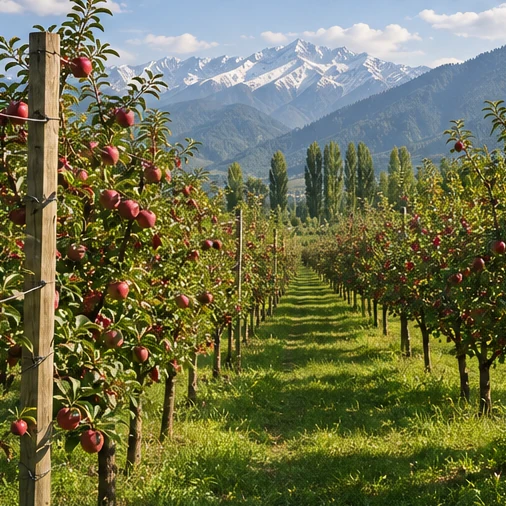
Tree fruit
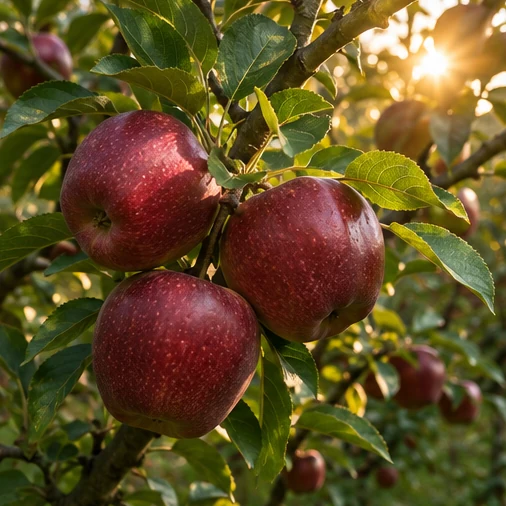
High-density apples
High-density planting uses size-controlling rootstocks and trained canopies to fit more trees into a given area. For dwarfing rootstocks such as M.9, trellis support and reliable irrigation are integral to the design.
- Match cultivars, rootstocks and compatible pollinizers to the site.
- Set row spacing and orientation around light, slope and equipment access.
- Plan the trellis, drip system and canopy training together.
Soft fruit
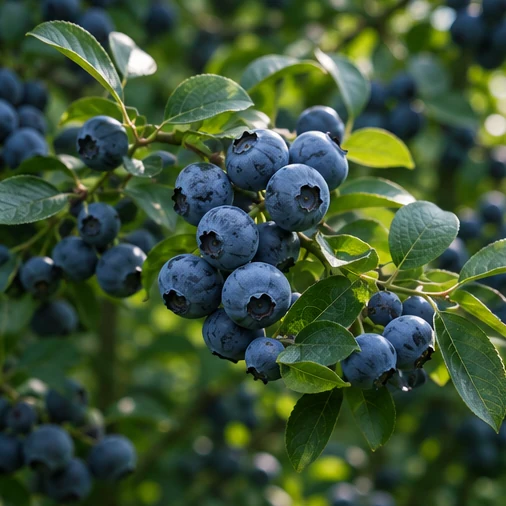
Blueberries
Blueberries have shallow roots and need a well-drained, acidic growing medium with consistent moisture. Soil and water tests help determine whether a site can support them and how to prepare the planting area.
- Check soil pH, drainage and irrigation water quality before planting.
- Compare in-ground rows, raised beds or containers where appropriate.
- Plan mulch, drip irrigation and compatible cultivars for the site.
Stone fruit
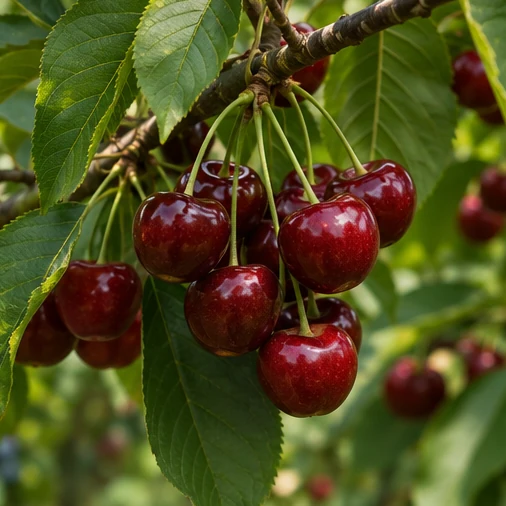
Sweet cherries
Cherry planting begins with a look at frost exposure, drainage and rain during ripening. Kashmir extension guidance covers established varieties such as Double and Misri alongside selections such as Regina and Kordia.
- Match cultivar and rootstock to the site, then verify pollination compatibility.
- Plan a training system that suits picking and pruning.
- Allow for bird pressure, rain cracking and prompt postharvest handling.
The development process
From site assessment to planting
-
Assess the land
Review the plot’s slope, elevation, soil, access and water source. On replant sites, consider the history of the existing orchard.
-
Design the block
Choose the crop mix, planting density and layout. Map pollinizer placement, irrigation lines, trellis requirements and working space.
-
Prepare and plant
Agree on the planting schedule, prepare the rows and coordinate planting material, support structures and irrigation.
-
Guide establishment
Plan first-season watering, training and plant checks so young trees or bushes can establish.
Before you start
Planning questions
Growing guidance from ICAR-CITH, Penn State Extension, SKUAST-Kashmir and Oregon State University Extension.
What should I share about my land?
Send the village or district, approximate land area, present use, available water source and the crops you’re considering. Photos, elevation and recent soil tests are helpful if available.
Can an existing orchard be redeveloped?
Yes, depending on the site. Tree health, drainage, irrigation and replant history help determine whether to renovate the block or prepare it for new planting.
How do you decide the spacing?
Spacing depends on the crop, expected vigour, training system, terrain and equipment access. We assess these together with water supply and soil conditions.
When can planting begin?
The planting window depends on the crop, local weather, site readiness and the availability of suitable planting material. Share your target season when you enquire.
Tell us about your land
We can discuss a new planting or the redevelopment of an existing orchard.